|
Training and Coaching
> Outcome-Oriented Project Management |
|
|
![]() |
|
|
|
Our Project Management trainings integrate three main
threads:
|
|
1. Technical tools such as PERT and Gantt charts, work breakdown structures, estimating and tracking 2. Relational skills critical in effective management and participationalso useful for vendors, customers and other partners to projects 3. Live project-planning workon running or anticipated programs, or post-mortems on especially successful or other projects that may offer useful lessons. |
|
|
We have also worked with selected clients to improve integration of IT systems with human management, including customization of project-planning software. Balancing these three threads depends on the participant group. Sales and marketing staff may require increased knowledge of formal planning tools. Many scientific, engineering and production groups find influence and teamwork skills to be a great enabler. Everyone profits from seminar time invested in real projects, both to explore and learn the new methods and principles, and to develop a reference experience at successful collaborative application. More than one major program has emerged from these trainings! |
|
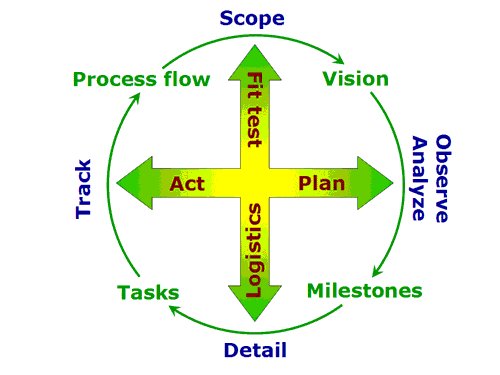
All of our Project Management trainings revolve around a few core concepts and practices. One of the most important is outcome-oriented thinking: working toward a specific, concrete objective known to be valuable to the organization. Too often, by contrast, precious resources are diverted into goals that are ill-defined or not strategically important. Worse, much activity is spent following procedures by habit or inertia with no clearly defined goal at all. So attention and mindfulness are also important foundations. Another core concept is the action/planning balance: too much of the former leads to confusion and misdirection; of the latter, paralysis by analysis and micromanagement. We encourage a flexible, dynamic and conscious movement between action and planning, big-picture concept and concrete detail. |
![]() |
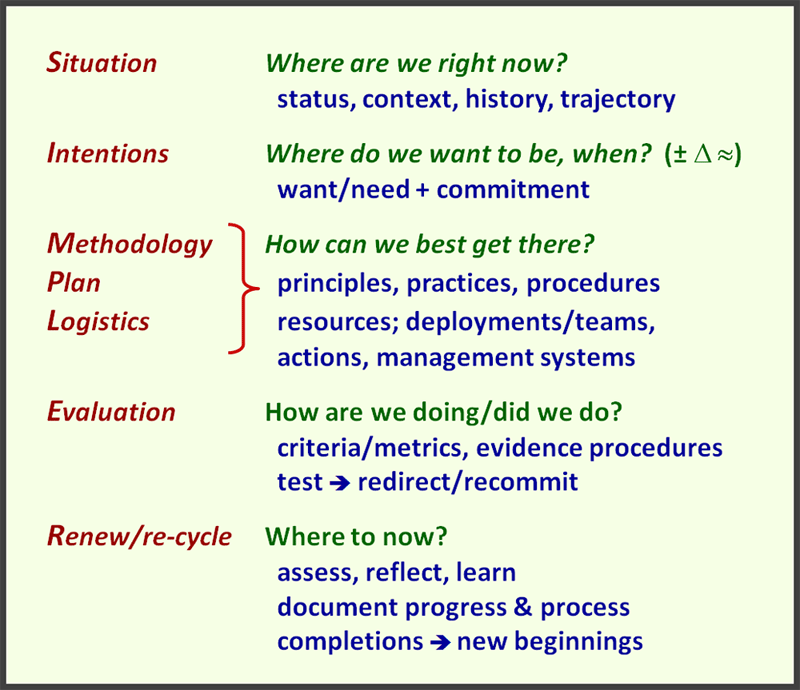
Many people are familiar with so-called SMART goalsSpecific, Measurable, Attainable, Relevant, Timed. We offer several alternatives to this formulation, including SIMPLER, which puts more attention on operational context and history, as well as distinguishing more clearly between intentions and methods. Each formulation brings new insight to projects and plans, and participants report major value from using two or three together. |
![]() |